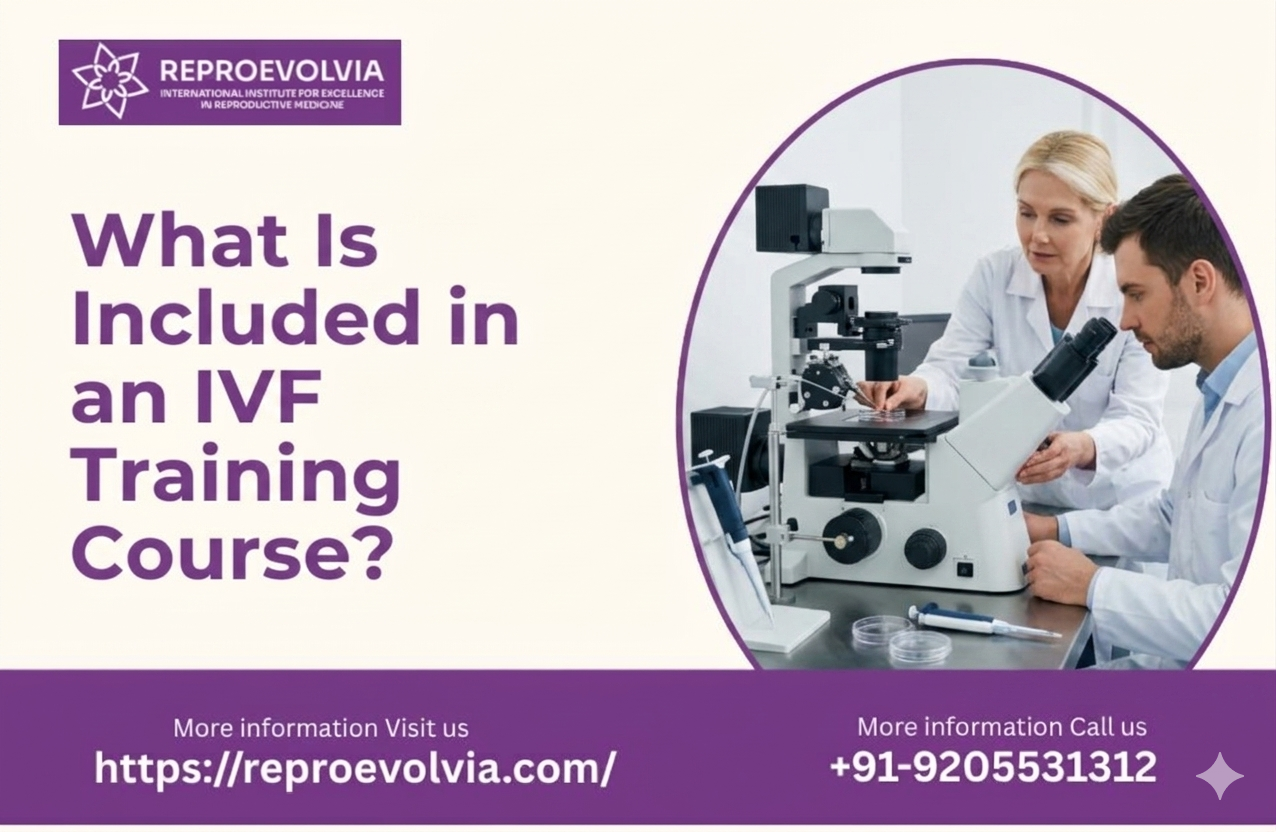

As infertility rates continue to rise globally, reproductive medicine has become one of the fastest-growing medical specialities. Many gynaecologists, obstetricians, and healthcare professionals are now exploring IVF training courses to expand their clinical expertise and career opportunities.
Before enrolling in a program, it is important to understand exactly what is included in an IVF training course and how it prepares doctors for modern fertility practice.
Understanding IVF Training
An IVF training course is designed to provide healthcare professionals with a comprehensive understanding of infertility diagnosis, fertility treatment, and Assisted Reproductive Technology (ART).
The goal is to equip participants with the knowledge and practical skills required to manage fertility patients effectively.
Female Infertility Evaluation
One of the foundational components of IVF training involves understanding female reproductive health and infertility assessment.
Topics commonly covered include:
- Ovarian reserve assessment
- Hormonal evaluation
- Ovulation disorders
- PCOS management
- Endometriosis
- Tubal factor infertility
- Recurrent pregnancy loss
Participants learn how to identify underlying causes of infertility and develop treatment strategies.
Male Infertility Assessment
Male infertility contributes significantly to fertility challenges, making it an essential part of reproductive medicine education.
Training often includes:
- Semen analysis interpretation
- Male reproductive physiology
- Hormonal assessment
- Sperm quality evaluation
- Male factor infertility management
This knowledge helps doctors provide comprehensive fertility care.
Ovulation Induction and IUI
Before progressing to IVF, many patients undergo less invasive fertility treatments.
An IVF training course typically covers:
- Ovulation induction protocols
- Fertility medications
- Follicular monitoring
- IUI indications
- IUI procedures
- Patient selection criteria
These skills form the foundation of fertility management.
IVF and ICSI Procedures
The core component of an IVF training course involves advanced reproductive technologies.
Participants learn:
- Controlled ovarian stimulation
- Egg retrieval procedures
- Fertilization techniques
- Embryo development
- Embryo transfer
- ICSI procedures
- Treatment planning
These topics are essential for fertility specialists involved in ART programs.
Embryology Fundamentals
A strong understanding of embryology is critical for fertility specialists.
Embryology modules often include:
- Gamete biology
- Fertilization mechanisms
- Embryo grading
- Blastocyst development
- Cryopreservation principles
- Laboratory quality control
Understanding laboratory processes improves collaboration between clinicians and embryologists.
ART Laws and Ethics
Modern fertility practice requires awareness of regulatory and ethical frameworks.
Participants are introduced to:
- ART regulations
- Ethical considerations
- Legal responsibilities
- Patient confidentiality
- Informed consent procedures
This knowledge ensures safe and responsible fertility care.
Clinical Case Discussions
Many advanced programs emphasise case-based learning.
Participants review:
- Complex infertility cases
- Failed IVF cycles
- Recurrent implantation failure
- Recurrent pregnancy loss
- Fertility preservation cases
Case discussions help translate theoretical concepts into clinical decision-making.
Practical Hands-On Training
Perhaps the most valuable component of an IVF training course is supervised clinical exposure.
Practical learning may include:
- Ultrasound monitoring
- Fertility consultations
- Procedure observation
- Treatment planning
- Clinical assessments
Hands-on training enhances confidence and real-world competence.
A comprehensive IVF training course extends far beyond laboratory procedures. It provides a complete understanding of reproductive medicine, infertility management, patient care, and assisted reproductive technologies.
For healthcare professionals seeking to build expertise in fertility care, selecting a program that combines theory, practical exposure, and mentorship is essential for long-term success.